AltaAqua ALTA AQUA
FLY THE INTERCEPT
1915 → NOW // COOPERATIVE DRONE SYSTEMS

THE SKY HAS DONE THIS BEFORE

In 1914 aircraft went up to watch. Within a year they were fighting each other, and a single technical edge decided who held the air. Drones are on the same path. AltaAqua builds the technologies that will decide it this time.

HISTORY, REPEATING FLY THE INTERCEPT
SCROLL
1914–1918 // NOW

HISTORY, REPEATING. WITH DRONES.

Military aviation went from spotting to air superiority in four years. Each step forced the next. Drones are moving through the same sequence, faster.

THEN // THE WESTERN FRONT NOW // THE DRONE WAR
1914 EYES ABOVE THE LINE
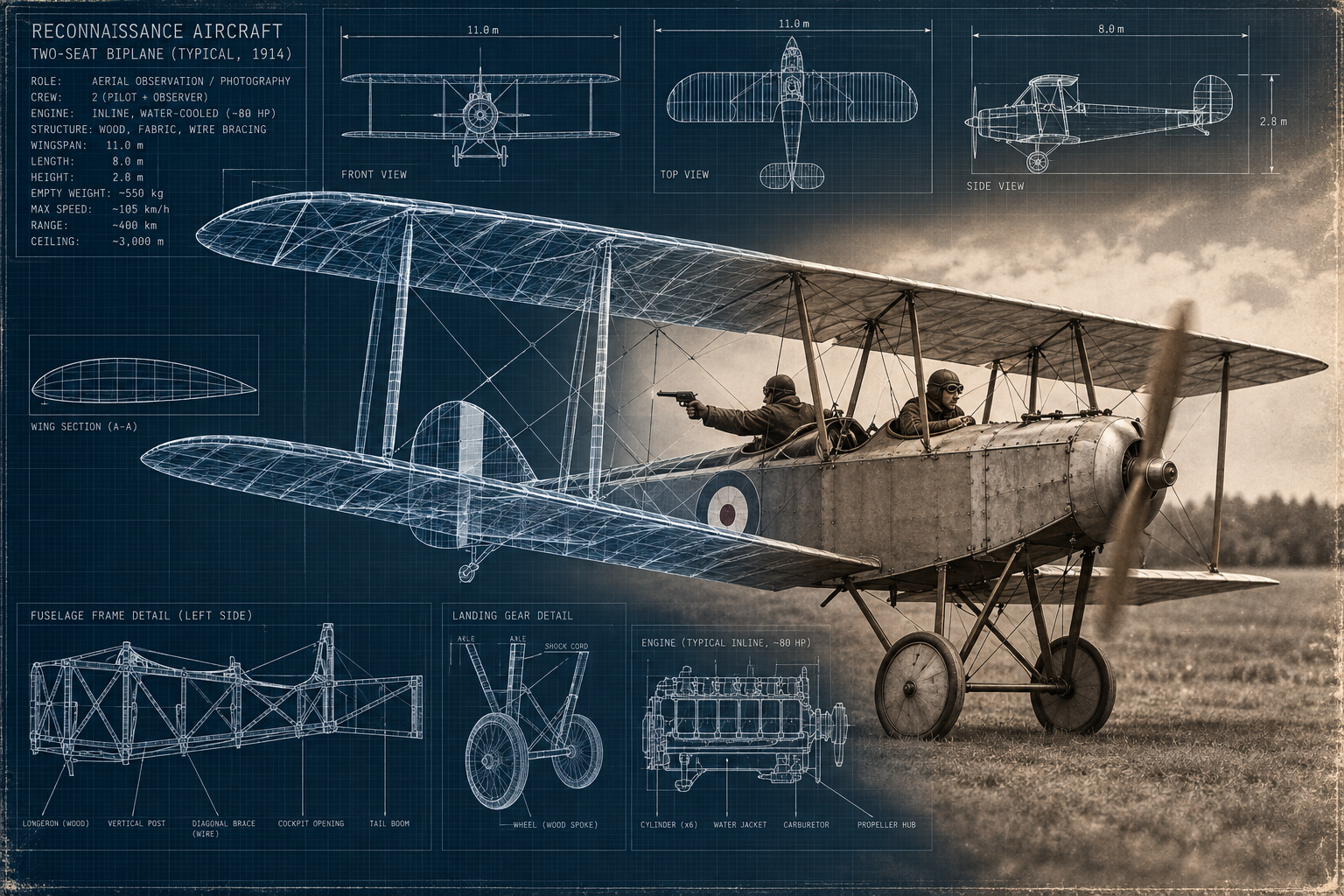
Two-seat reconnaissance biplane, 1914

Unarmed spotters

The first military aircraft carried no weapons. They flew reconnaissance and directed artillery fire. Opposing pilots passed each other without a fight.

NOW // ISR

Drones as spotters

Small drones now do the same work: finding targets and correcting fire in real time, in large numbers and at low cost.
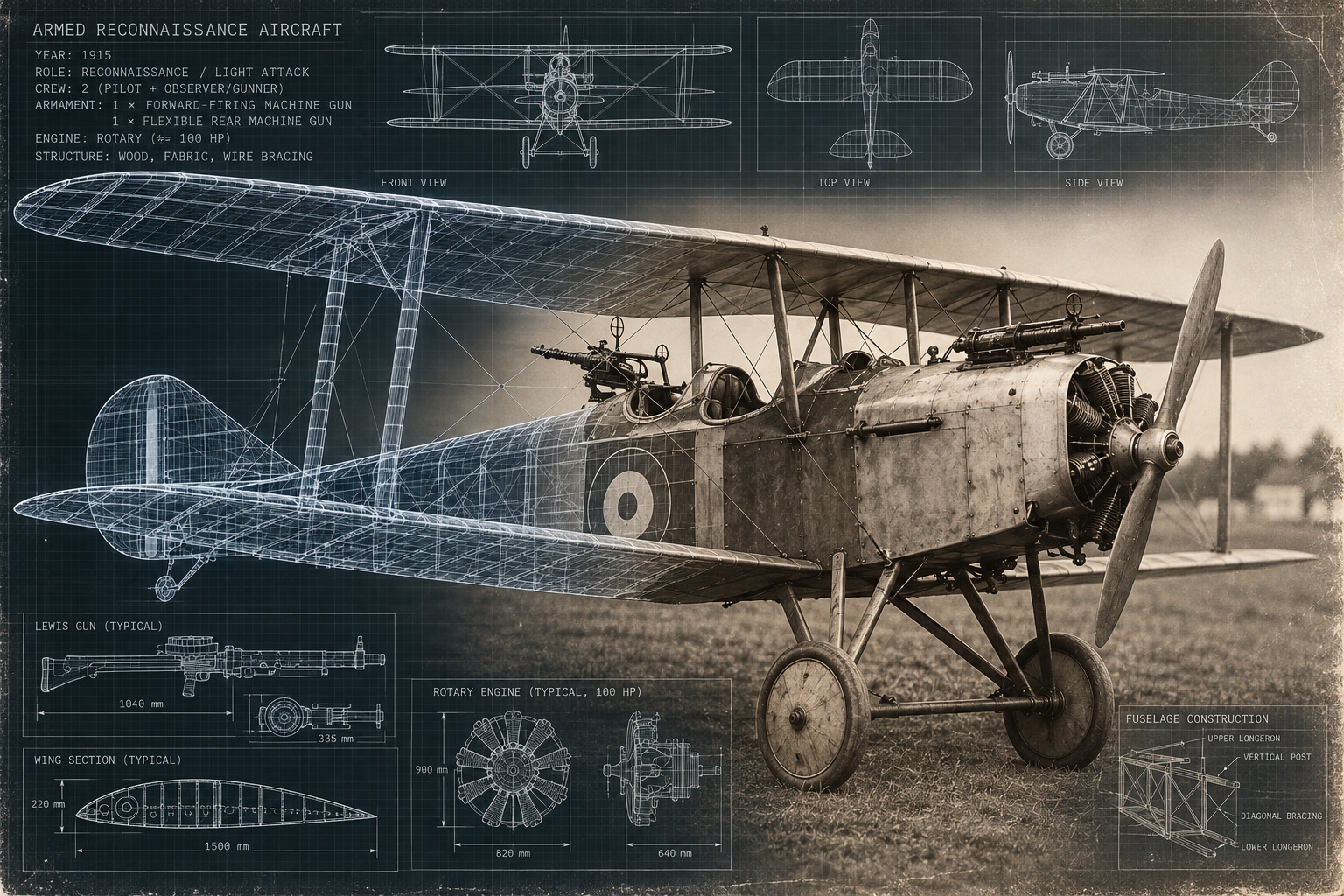
1915 IMPROVISED COMBAT
Armed reconnaissance biplane, 1915

Pistols, rifles, deflector plates

Pilots began carrying pistols, rifles, and grenades to bring down the other side’s spotters. Roland Garros fitted steel wedges to his propeller so he could fire straight through it.

NOW // COUNTER-DRONE

Nets, ramming, jamming

Drones are brought down by ramming, nets, shotguns, and jamming. Each works some of the time. None of them scales.

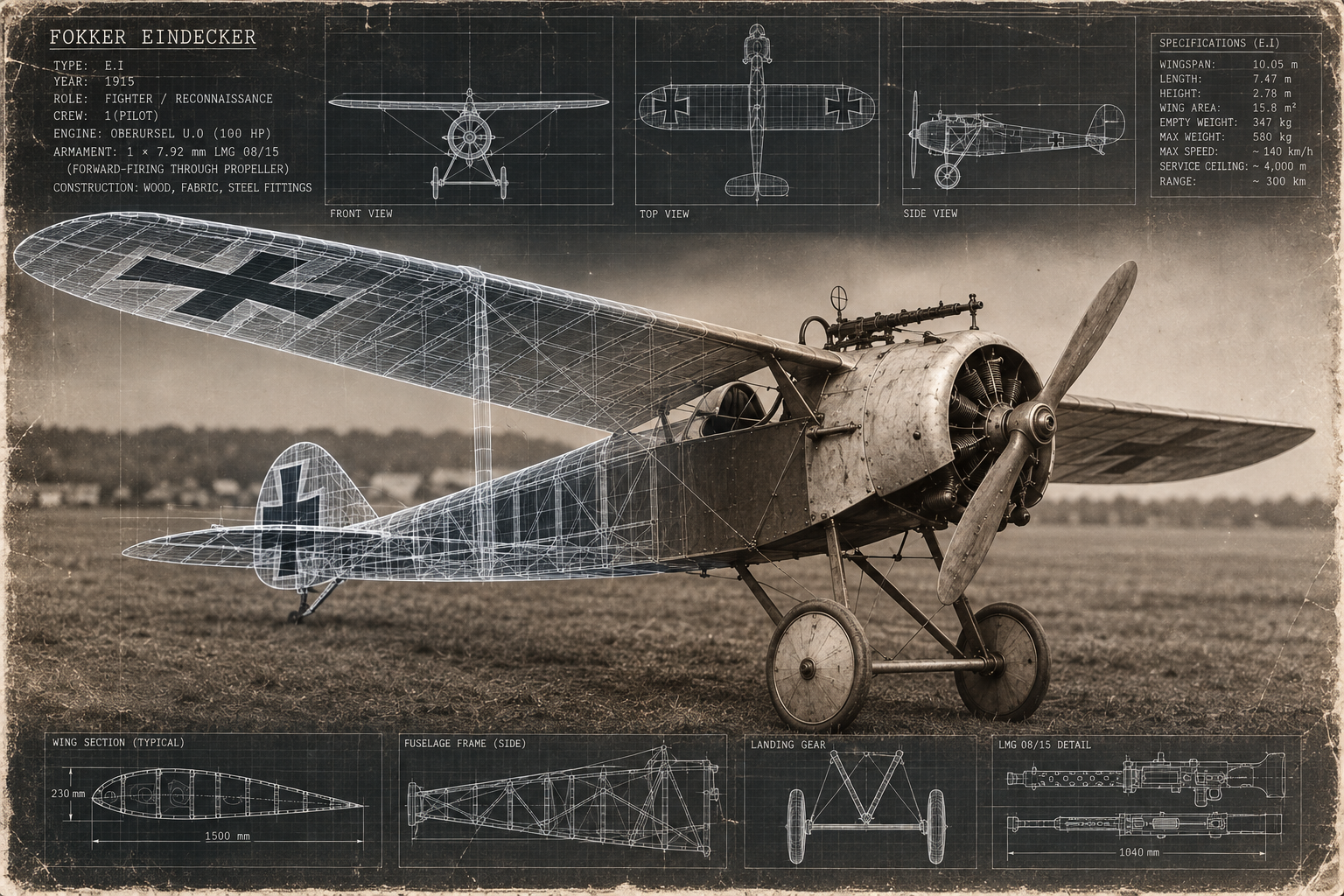
1915–16 THE FOKKER SCOURGE
Fokker Eindecker E.I

One technical edge

The Fokker Eindecker’s synchronised machine gun fired through the propeller arc. With it, pilots such as Immelmann and Boelcke gave Germany control of the air over the Western Front until the Allies answered in 1916.

NOW // THE EDGE

Link, navigate, detect, identify

The side whose interceptors can hold their links, navigate without satellites, and find and identify targets under jamming will hold the airspace. That edge is what AltaAqua is building.

1916–18 FROM ACES TO FORMATIONS
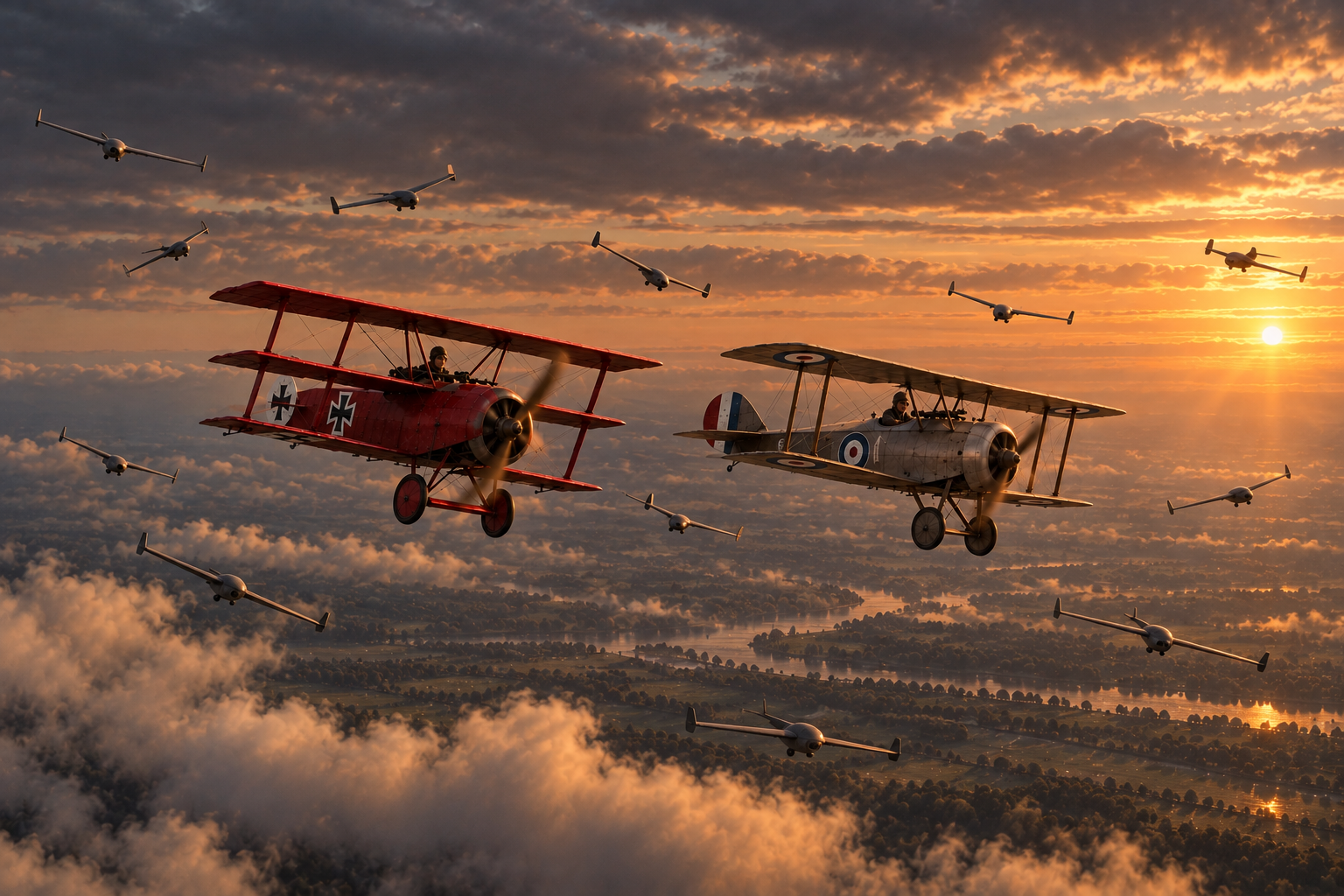
Red triplane and Allied biplane flying among drones at sunset

Richthofen, Bishop, and the Flying Circus

Aces such as Manfred von Richthofen and Billy Bishop became famous, but the air war was won by organisation. Boelcke’s rules of air fighting, the Jastas, and Richthofen’s Flying Circus made combat cooperative.

NOW // COOPERATIVE INTERCEPTION

The ensemble engages together

A fast drone cannot be stopped by one interceptor working alone. Detection is shared, tracks are handed forward, and the ensemble engages together under one command picture.

IN 1915 ONE TECHNICAL EDGE DECIDED WHO HELD THE AIR. IT WILL AGAIN.

BUILDING THE EDGE ↓
THE ENSEMBLE

EIGHT TECHNOLOGIES, ONE INTERCEPTOR

Each layer is developed as its own system and stands on its own. Together they give the interceptor its links, its position, its picture of the airspace, and its authority to engage.

02 NAVIGATE

Beacon navigation

Local positioning from deployed beacons, giving precise relative navigation where satellite positioning is unavailable or denied.

Terrain navigation

Terrain-referenced navigation for local flight, matching the ground below the vehicle against known terrain to hold position and route.

03 SENSE

Acoustic listening

Onboard acoustic sensing detects other aircraft by their sound, passively and without emitting.

Drone identification

Detected aircraft are classified by type from their signatures, so the system knows what it is looking at.

Cooperative listening

Several drones listen together and combine what they hear from separate positions, localising a target that no single vehicle could fix alone.

04 DECIDE

IFF

Identification friend or foe across the ensemble, so every track is tagged before any vehicle is tasked against it.

05 COMMAND

Command and control

Configuration, monitoring, and control of the whole ensemble from one operator picture, including defence in depth and cooperative engagement of fast threats.

06 THE INTERCEPTOR WHERE THE STACK COMES TOGETHER ↓
THE CULMINATION // INTERCEPTOR DEMONSTRATOR

ONE PURSUIT PROBLEM, SOLVED TWICE

MANUAL

The pilot must find the target, regulate closure, avoid the deck and structures, and hold the hostile inside the reticle long enough to establish a lock.

AUTONOMOUS

The controller predicts an intercept point, estimates closest approach, regulates closure, checks its projected path for obstacles, and re-solves the pursuit as the hostile changes direction.

SHARED

Both modes use the same flight model, target behaviour, hazards, timing, scoring, and rendering systems.

INTERCEPTOR RUNTIME // LIVE

FLY THE INTERCEPT

Drag or steer with the arrow keys. Hold the hostile inside the reticle to establish a lock. Switch to AUTO and watch the controller solve it.

T+0.0 RNG --- LOCK 0%
RUST / WASM RUNTIME SHARED FLIGHT MODEL PROPORTIONAL NAVIGATION OBSTACLE-AWARE PATH CHECK
05 // COMMAND

COMMAND AND CONTROL

The command and control system is how operators configure the ensemble, see what every node sees, and direct it. It turns separate sensors, links, and vehicles into one coordinated system.

SET UP

CONFIGURE

Define nodes, roles, sectors, links, and rules of engagement before and during a mission.

SEE

MONITOR

One live picture of every track, every vehicle, every link, and the health of each node.

DIRECT

CONTROL

Task vehicles, hand tracks between them, and approve or withhold engagements.

C&C // LAYERED DEFENCE

DEFENCE IN DEPTH

Protection is arranged in rings. The outer ring detects, the middle ring identifies and decides, the inner ring intercepts. A target that passes one ring meets the next, and every ring reports into the same command picture.

No single sensor, link, or vehicle is a point of failure. If a node is lost or jammed, its neighbours carry the track.

DETECT
IDENTIFY + IFF
INTERCEPT PROTECTED ASSET
C&C // COOPERATIVE ENGAGEMENT

VERY FAST THREATS

Against a fast drone, the time between first detection and the point where it must be stopped is too short for one sensor and one interceptor working alone. Detection is shared across the ensemble, the track is handed forward to vehicles ahead of the target, and the interception is solved cooperatively.

OUTER NODES

DETECT

Acoustic nodes on the outer ring hear the target first and share bearings across the link.

ENSEMBLE

LOCALISE

Cooperative listening fuses those bearings into a track that every node can use.

C&C

IDENTIFY

The track is classified and passed through IFF before any vehicle is tasked.

FORWARD INTERCEPTOR

INTERCEPT

The track is handed to an interceptor already ahead of the target, which solves the pursuit.

ALTA AQUA // ADVANCED R&D

MISSION-CRITICAL DEVELOPMENT

AltaAqua develops autonomous robotic systems, embedded electronics, simulation infrastructure, sensing platforms, and mission software. The work shown here represents active programs moving through implementation, integration, simulation, prototyping, and field-oriented validation.

The common foundation is mission-critical software engineered for real machines. Rust is used where reliability, performance, concurrency, deterministic behaviour, and long-term maintainability matter.

The interceptor demonstrator is one visible part of that larger systems-development approach.

CORE SOFTWARE CAPABILITY

MISSION-CRITICAL RUST, EVERYWHERE

Rust is a core development language across AltaAqua systems. It provides native performance without giving up memory safety, strong concurrency guarantees, precise resource control, and maintainability as systems become more complex.

EMBEDDED

Rust runs close to sensors, radios, motors, actuators, navigation hardware, and flight-control loops.

MOBILE AND DESKTOP

The same systems core supports operator applications, provisioning, telemetry, engineering tools, simulation front ends, data processing, and hardware interfaces.

WEB

This site and the interceptor application are delivered through WebAssembly while retaining Rust across the product stack.

SIMULATION AND VALIDATION

DIGITAL ENGINEERING

AltaAqua connects real flight computers and robotic controllers to realistic three-dimensional simulation. Mission software receives simulated sensor data and returns real control commands through the same interfaces used by physical machines.

This allows autonomy, sensors, airframes, operating environments, and failure cases to be compared rapidly before physical testing consumes vehicles or field time.

The objective is to narrow the gap between simulation and deployment rather than treating simulation as an isolated visualization product.

OTHER WORK

CONNECTED R&D PORTFOLIO

SUBSURFACE SYSTEMS

UNDERWATER ROBOTICS

AltaAqua develops underwater robotic systems for sensing, inspection, navigation, bottom-crawling mobility, and persistent operation in difficult water environments.

SENSOR FUSION

PRECISION GUIDANCE

AltaAqua develops precision guidance that combines optical tracking, inertial estimation, stabilized pointing, confidence scoring, embedded control, and realistic simulation.

DEVELOPMENT PATH

FROM R&D TO FIELDED SYSTEMS

Every technology in the stack is an active development program. Each moves through the same sequence, and the shared software, simulation, and interfaces mean progress on one carries into the others.

Taking the ensemble to market is long-cycle engineering. AltaAqua is building the partnerships and backing to carry it through field validation and into production.

01

SIMULATION

Autonomy, sensors, and failure cases are exercised against real flight software in simulation.

02

PROTOTYPE

Hardware is built around software that has already been tested.

03

INTEGRATION

Subsystems are joined into the ensemble through shared links and interfaces.

04

FIELD VALIDATION

Systems are tested in the conditions they are designed for.

05

MARKET

Validated systems are taken into production and delivery with partners.

COLLABORATION

PARTNERSHIPS

Advanced robotic systems are built through integration. AltaAqua works with vehicle developers, sensor manufacturers, research groups, industrial operators, government organizations, and software teams that need mission-critical capability.

Partnerships can begin at the simulation, subsystem, prototype, or full-program level. Components and interfaces are designed to integrate with existing hardware and mission architectures rather than requiring an isolated stack.

TEAM DEVELOPMENT

CAREERS

AltaAqua is building a multidisciplinary engineering organization around robotics, embedded systems, Rust, simulation, sensing, autonomy, electronics, and product development.

The work suits engineers who want to move between algorithms and hardware, write code that directly controls physical systems, build tools that accelerate testing, and take responsibility for complete technical outcomes.

CONTACT

BUILD WITH US

AltaAqua is interested in serious discussions with strategic partners, research organizations, mission owners, technical collaborators, and investors who understand long-cycle engineering development.

Relevant conversations include joint development, funded research, prototype programs, simulation and validation partnerships, embedded and autonomy development, technology licensing, and investment.

CONTACT
[email protected]